
Diabetic wound care
Wounds that don’t heal can lead to serious foot problems
People with diabetes are more likely to develop foot wounds due to poor circulation and nerve damage. These wounds may start small but can become infected or lead to deeper tissue damage if not treated early.
Diabetic wounds often form on pressure points like the bottom of the foot or the heel. Without treatment, they can lead to hospitalization or amputation. Early care, protective measures, and regular monitoring are key to keeping the foot healthy and preventing complications.
Common Questions about Diabetic wound care
Why do people with diabetes get foot wounds?
Diabetes can reduce blood flow to the feet and cause nerve damage, making it harder to feel injuries or pressure spots. Without enough circulation, even small wounds take longer to heal.
What does a diabetic foot ulcer look like?
It may look like an open sore or a darkened area on the foot that doesn’t close. The skin around it might be red, swollen, or warm.
How are diabetic foot wounds treated?
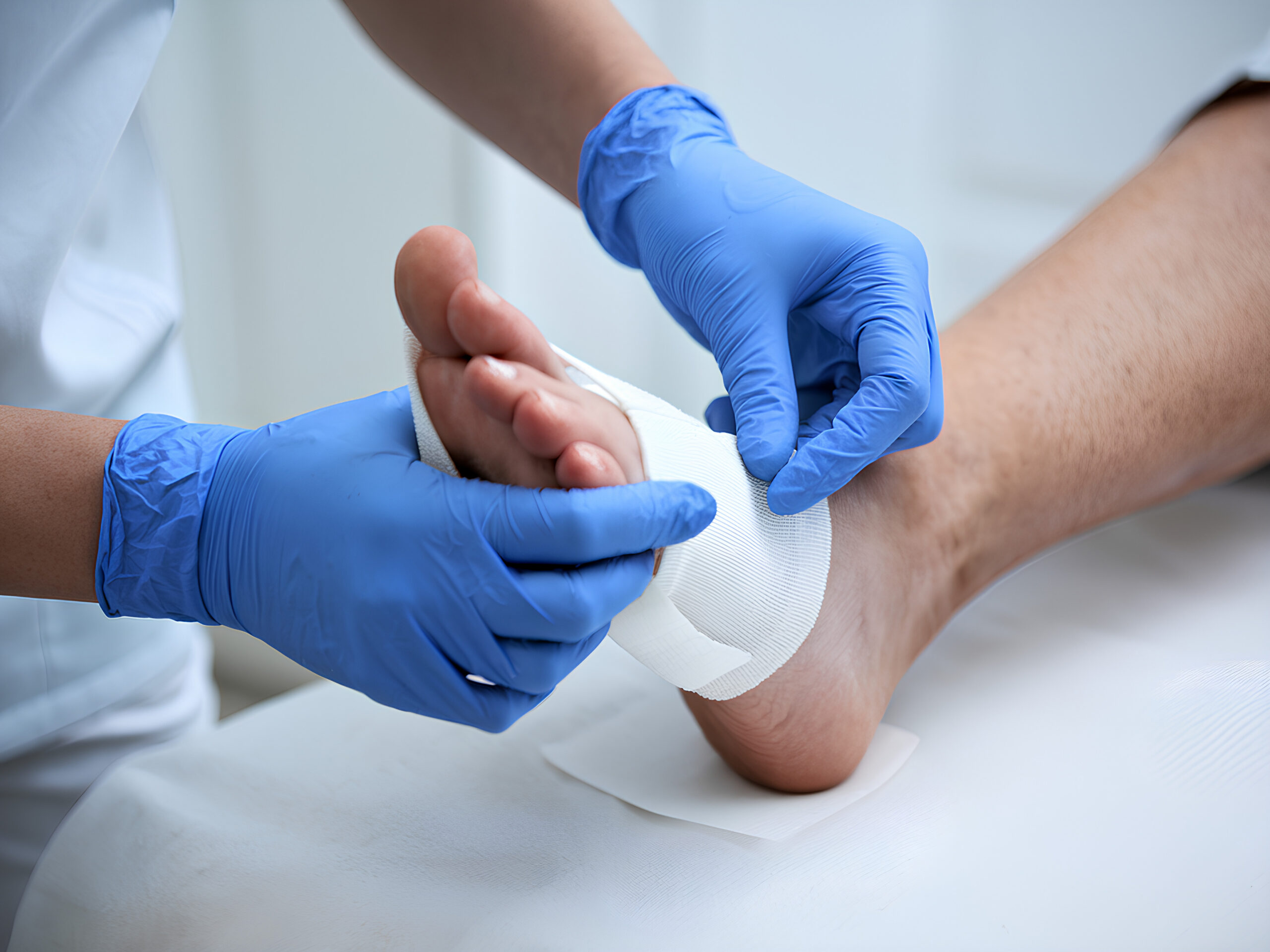
Treatment often includes keeping weight off the wound, removing dead tissue, applying dressings, and protecting the area from infection. In some cases, antibiotics or advanced wound therapies may be used.
When should I see a doctor?
If you have diabetes and notice any sore, blister, or break in the skin on your foot that doesn’t heal quickly, you should schedule a visit. Delaying care increases the risk of serious problems.
What happens if the wound gets infected?
An infected wound can spread to the skin, bone, or bloodstream. This may require hospitalization or surgery, especially if the infection is deep.
How can I prevent foot wounds if I have diabetes?
Check your feet daily, wear supportive shoes, and schedule regular foot exams. Keeping blood sugar in a healthy range can also help your body heal.
Treatment Options
Care for diabetic wounds focuses on helping the wound close and preventing infection. Depending on the size and severity of the wound, treatment may include:
- Offloading pressure with special shoes or boots
- Debridement (removal of dead tissue)
- Protective dressings and topical treatments
- Antibiotics for infected wounds
- Coordination with vascular or infectious disease specialists
- Surgery in severe or non-healing cases
We provide diabetic wound care at all locations, with access to in-office procedures and regular follow-up.
Meet our providers
Our doctors are ABFAS Board Certified and are all Fellows in the American College of Foot and Ankle Surgeons.
Meet the Doctors
Why patients choose us
Patients come to us for careful exams, clear answers, and treatment that works.

Doctors with years of experience

Offices across Rhode Island and Massachusetts

Advanced treatments for complex cases

Clear communication before and after your visit
4.9-star average from more than 2,000 patient reviews
“ Very helpful and pleasant. My feet always feel better after I visit their clinic. I would recommend them without hesitation.James H.P.
Locations across Rhode Island & Massachusetts
We have offices in North Providence, Warwick, Pawtucket, Cranston, East Providence, Johnston, Newport, and other nearby towns. Each location has its own hours and contact information. Many offer same-week appointments.
See all Locations